
Vienna · 18th–20th centuries
Vienna: a table for the newspaper
A cup fits on a saucer; a newspaper needs a table. A photograph of Café Dobner and the reading rooms of old Vienna show what a guest could do with a single order and an entire morning.
A reader enters the picture
The Wien Museum holds a photograph of the old Café Dobner from 1909. Its catalogue entry does not list varieties of coffee; it identifies the people in the room: café guests, newspaper readers and waiters. For a historian of drinks, that is a useful change of focus. A cup tells you what someone ordered. A reader suggests why they came.
Newspapers had been there long before the photograph. The Austrian Commission for UNESCO traces the custom to 1720 and Café Kramer on the Graben. The museum has another piece of evidence: a photograph of a dedicated reading room at Café Griensteidl from before 1897. The same album contains a room there for card players. People at neighbouring tables might have had quite different ideas of an enjoyable evening.
When a second cup can wait
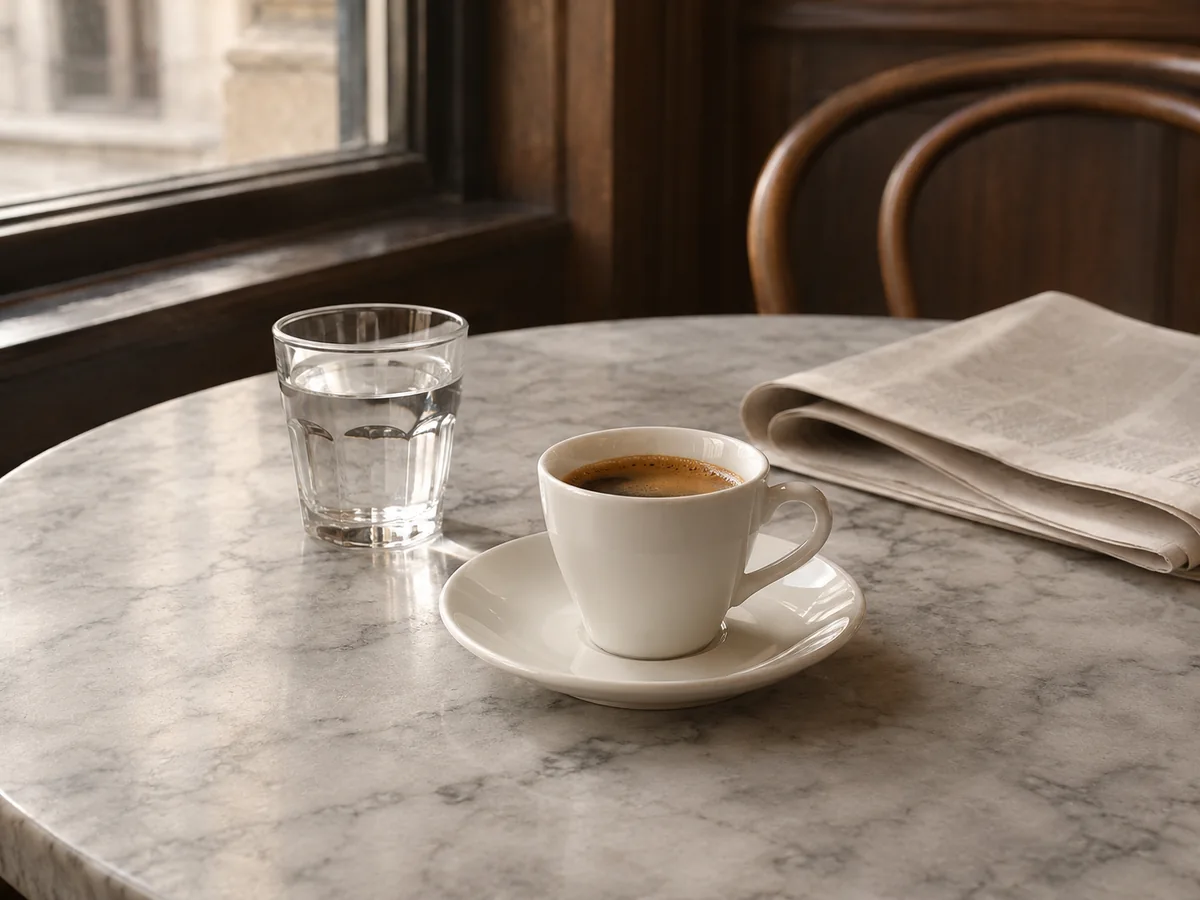
In 2011 Viennese coffee house culture entered Austria’s national inventory of intangible heritage. The description puts marble tables, bentwood chairs and a place for newspapers side by side. You can buy marble and copy a chair. Harder to reproduce is the understanding that allows a guest to unfold a paper and read while the coffee cools. A photograph cannot tell us how long any one person stayed; a dedicated reading room does tell us the activity was given space.
Look at a table of your own through that reader’s eyes. If a guest opens a book, where does the water glass go? Does waiting for a friend feel like a reason to order again? Sometimes the most attentive thing a server can do is remove a spare saucer and leave the space free. Coffee quality matters, but quite another detail may decide how long the visit lasts.