

Dry Martini
What it tastes like
Dry vermouth leaves the gin in the foreground: look for juniper and the scent of lemon oil.
Strength: very high 5 out of 5Based on one serving

Ingredients 1 serving
Recipe note
Six parts gin to one part dry vermouth. Lemon oil highlights the aroma of the gin.
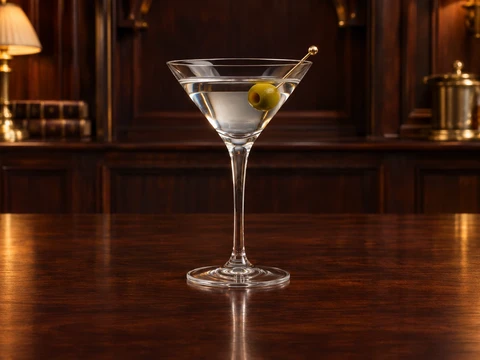
Garnish Express the lemon zest oils over the surface. Optionally, add a green olive instead.
How to make it
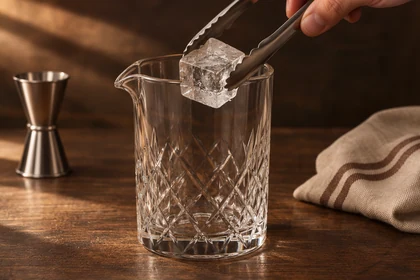 Step 1
Add ice
Place ice cubes in the mixing glass. Lower the ice with a scoop or tongs closer to the bottom to avoid hitting the glass.
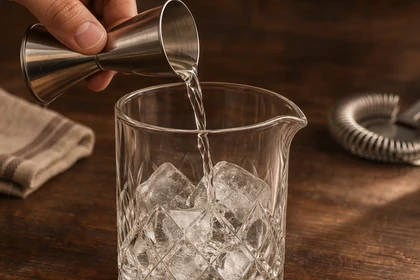 Step 2
Gin
Gin — 60 ml.
Measure the portion and pour it into the mixing glass.
- Step 3
Dry vermouth
Dry vermouth — 10 ml.
Measure the portion and pour it into the mixing glass.
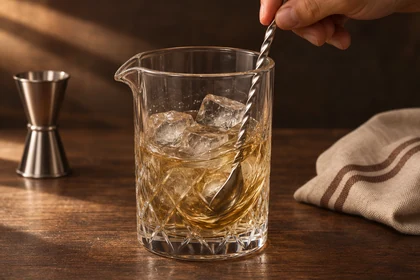 Step 4
Stir
Lower a long spoon almost to the bottom and stir around the inside of the glass to mix the layers. With a smooth stirring motion, the ice turns along the wall of the mixing glass.
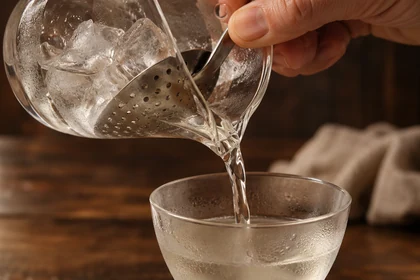 Step 5
Strain
Hold a cocktail strainer against the lip of the mixing glass to keep the ice inside. Tilt the mixing glass and pour into the chilled serving glass without ice.
 Step 6
Garnish
Express the lemon zest oils over the surface. Optionally, add a green olive instead.
Why this pairing works
The salty, fatty fish softens the dry taste.
The exceptions selected are for the drink. Check the composition of the dish separately.
Glass and serving
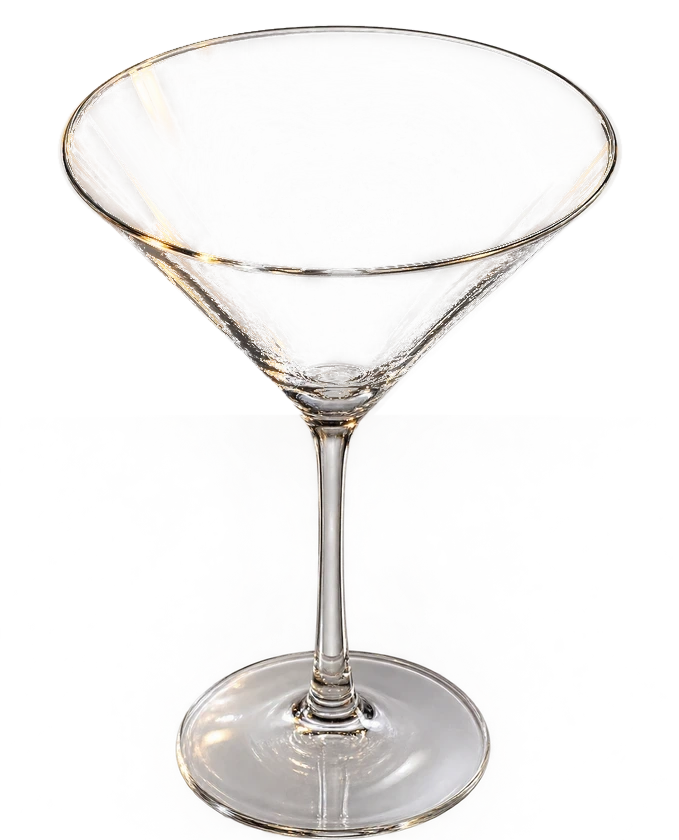
Martini glass
The chilled drink is poured without ice, the surface is clearly visible in the wide bowl, and you can hold the glass by the leg.
In this form, the straight walls diverge from the leg to the wide edge, forming a cone.
Another glass you can use A small chilled coupe or wine glass.
Tools and ice
Serving glass: Martini glass.
Cut a thin strip of zest. If the recipe calls for its oils, bend the strip over the glass.
Ice: When straining, leave the mixing ice behind. Add fresh ice to the serving glass only if the recipe calls for it.
Making your first cocktail?
The mixing glass is left open, and the barspoon is led along the wall in smooth circular motions.
To strain, pour through a bar strainer. To double-strain, hold a fine sieve over the glass as well.
How to Replace Ingredients
The measures in the hints are given for one portion.
- Gin
Recipe measure: 60 ml. Other listed options are dry gin and Old Tom gin.
- Dry vermouth
Recipe: 10 ml. Look for dry or extra dry. For example, Noilly Prat Original Dry. Sweet red vermouth will noticeably change flavor. Editorial replacement: Dry white wine, 10 ml. There will be less herbal flavors and strength. Martini’s guide to vermouth
The history of the cocktail
On a 1930 page in London's The Savoy Cocktail Book, Dry Martini doesn't look like the common image of a glass with an almost invisible vermouth drop.
Read onTurn the story
When there was more vermouth
Harry Craddock measured gin and French vermouth equally, added orange bitters, shaked with ice and strained. The book captures a specific bar version of his time, rather than a perpetual standard of "dryness."
The current IBA card has a different proportion: 60 ml of gin and 10 ml of dry vermouth. The association suggests mixing them with ice, straining them into a chilled glass, and choosing the flavor of lemon peel or olive at the guest's request, differing not only in the amount of vermouth, but also in the method of cooling.
Two dated formulas help to ask a useful question in the bar: what kind of Dry Martini do you want? The word "dry" in the title does not change the fact that balance and pitch changed. If you repeat the historical version, you should name its year and source, and for the modern one, you should follow the chosen card without mixing the instructions of different eras.
Save recipe
Recipe source
International Bartenders Association
Stir the gin and vermouth in a mixing glass with ice cubes. Strain into a chilled martini glass.
Illustration of the presentation created for the "Cocktail Atlas".
What to try next
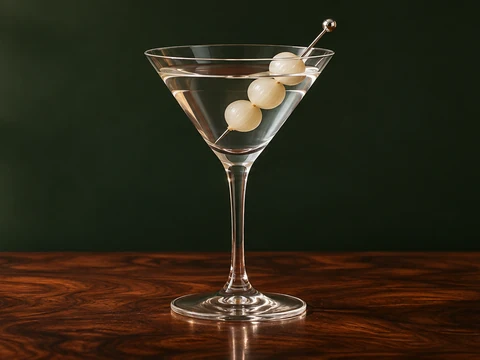 GibsonJuniper · dry · saltyStrength: Very strong 5 out of 5Both recipes use gin and dry vermouth. The other drink’s flavour profile includes “lightly salty”.
 CardinaleDry vermouth · bitter herbsStrength: Strong 4 out of 5Both recipes use Gin and Dry vermouth. In this one, look for bitterness.
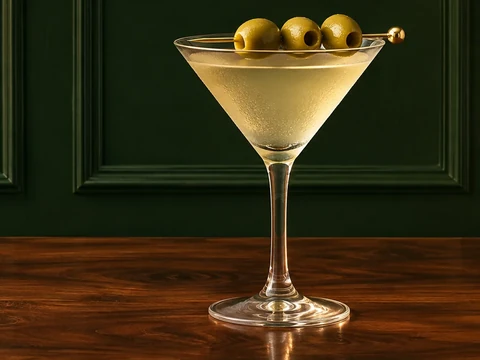 Dirty MartiniJuniper · Saline · DryStrength: Strong 4 out of 5Both recipes use dry vermouth. The other drink’s flavour profile includes “lightly salty”.
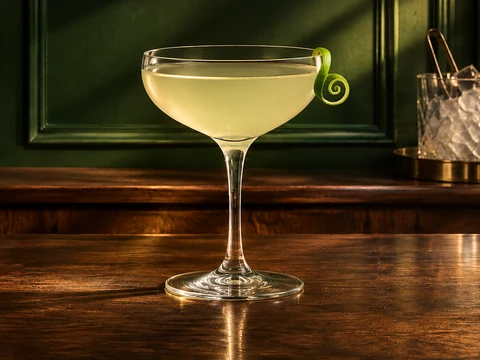 GimletLime · DryStrength: Strong 4 out of 5Both recipes use Gin. In this one, look for lime.
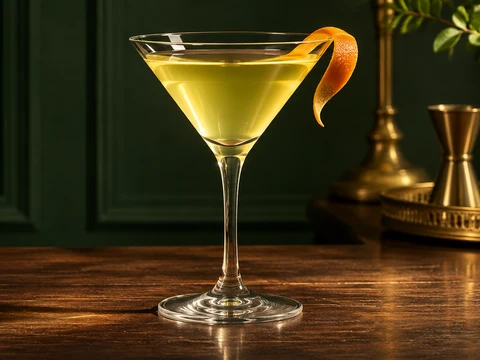 AlaskaHerbal · Spicy · JuniperStrength: Very strong 5 out of 5Both recipes use Gin. In this one, look for herbs.
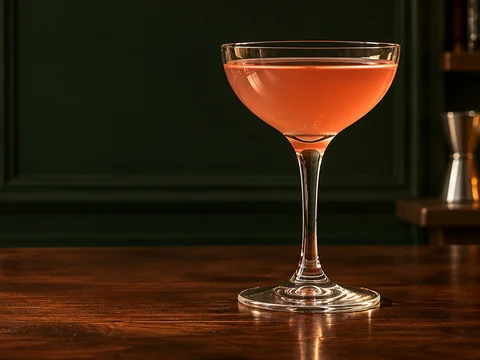 El PresidenteRum · Orange · DryStrength: Strong 4 out of 5Both recipes use Dry vermouth. In this one, look for rum.