

Pisco Sour
What it tastes like
Pisco brings a grape aroma to the tart lemon juice. The egg white makes a soft foam for the finishing drops of bitters.
Strength: moderate 3 out of 5Based on one serving

Ingredients 1 serving
What's dash? It's a small portion of liquid from a dispenser bottle. Turn it over the glass and take one short stroke down. Two dashes, two strokes. The volume depends on the dispenser.
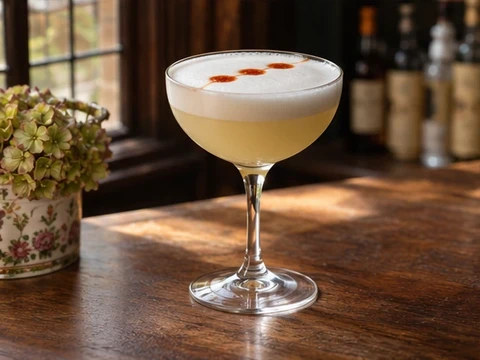
Garnish A few dashes of Amargo bitters over the foam.
How to make it
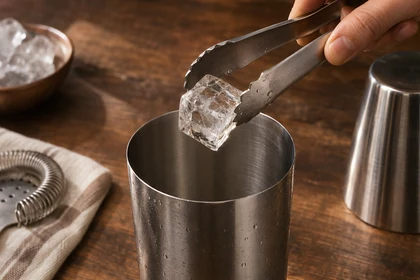 Step 1
Add ice
Place ice cubes in the larger part of the shaker. Leave room inside so the ice can move freely when shaking.
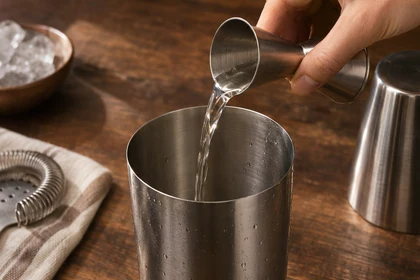 Step 2
Pisco
Pisco — 60 ml.
Measure the portion and pour it into the shaker.
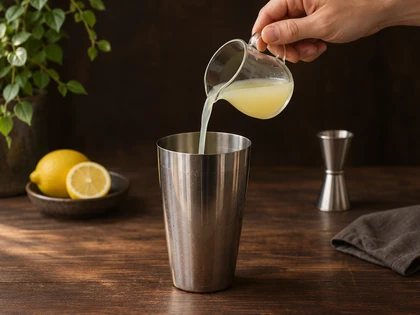 Step 3
Lemon juice
Fresh lemon juice — 30 ml.
Measure the juice and pour it into the shaker. If squeezing it yourself, catch any seeds in a fine sieve. The listed quantity is for the juice. The size of the fruit can vary.
- Step 4
Simple syrup
Simple syrup — 20 ml.
Measure the syrup and pour it into the shaker. Let the last of it drain from the jigger.
- Step 5
Add the pasteurised white
Pasteurised egg white — 1
Separate one pasteurised egg over a clean bowl and add the white to the shaker. For pasteurised carton whites, use the amount the label gives for one egg white.
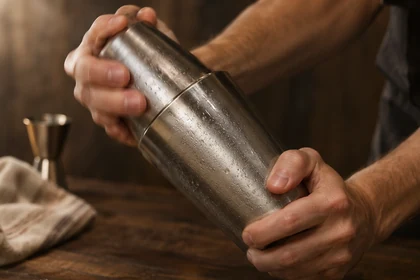 Step 6
Shake
Seal the shaker and hold it with both hands. Shake until the outside feels cold.
 Step 7
Strain
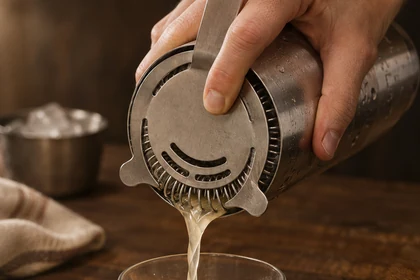
Hold a cocktail strainer against the lip of the shaker to keep the ice inside. Tilt the shaker and pour into the chilled serving glass without ice.
 Step 8
Garnish
Flick a few dashes of Amargo bitters onto the foam and leave them on the surface.
Why this pairing works
The citrus dressing supports the lemon in the glass, while the delicate foam softens the heat of the onion.
The exceptions selected are for the drink. Check the composition of the dish separately.
Glass and serving
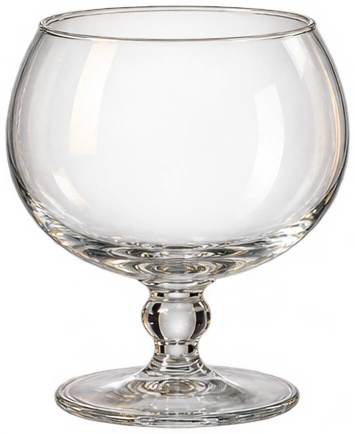
Chilled goblet
The strained sauer is served cold. The wide bowl leaves room for the foam, which is then applied to the bitters at the end.
Another glass you can use A small chilled glass or an open-top wine glass.
Tools and ice
Serving glass: Chilled goblet.
For bitters measured in dashes, use a dasher bottle. One short downward flick over the drink gives one dash.
Ice: When straining, leave the mixing ice behind. Add fresh ice to the serving glass only if the recipe calls for it.
Making your first cocktail?
A cocktail shaker lets you shake the drink with ice. Seal it and keep a hand on each half as you shake.
To strain, pour through a bar strainer. To double-strain, hold a fine sieve over the glass as well.
How to Replace Ingredients
The measures in the hints are given for one portion.
- Pisco
The recipe calls for 60 ml. Choose the ingredient listed.
- Fresh lemon juice
Recipe: 30 ml is also suitable: Lemon.
- Simple syrup
The recipe calls for 20 ml. Choose the ingredient listed.
- Pasteurised egg white
Recipe quantity: 1. Use the pasteurised egg product specified. You can separate a pasteurised shell egg and measure the required part.
The history of the cocktail
In the 1920s, Lima's Morris Bar touted Pisco Sour as its signature pitch.
Read onTurn the story
Branded drink bar in Lima
With these announcements, the Peruvian tourism authority links the name of the owner Victor Morris and one of the versions of the origin of the cocktail. Today, it has a place in the country's calendar: the first Saturday in February in Peru celebrates Pisco Souer Day.
Save recipe
Recipe source
International Bartenders Association
Shake the pisco, lemon juice, syrup and egg white with ice until foamy, then strain into a chilled goblet.
Illustration of the presentation created for the "Cocktail Atlas".
Sources of product clues
What to try next
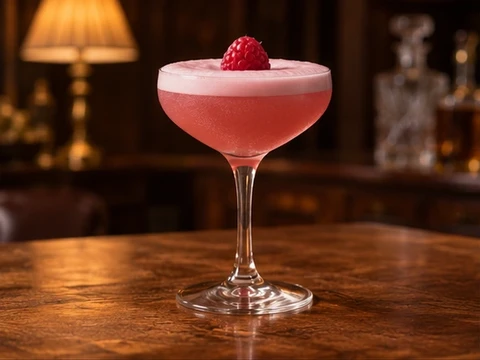 Clover ClubRaspberry · lemon · soft foamStrength: Moderate 3 out of 5Both recipes use Fresh lemon juice and Pasteurised egg white. In this one, look for raspberry.
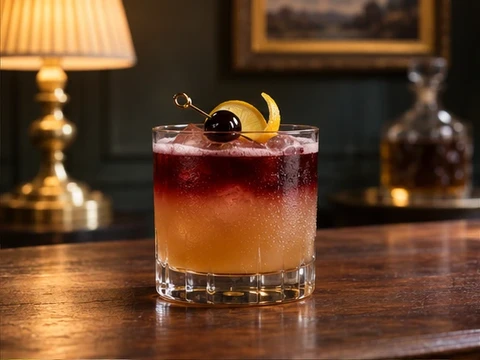 New York SourRed wine · tart lemonStrength: Moderate 3 out of 5Both recipes use Fresh lemon juice and Pasteurised egg white. In this one, look for wine.
 East of EdenLemon · elderflower · white grapeStrength: Moderate 3 out of 5Both recipes use Fresh lemon juice and Pasteurised egg white. In this one, look for lemon.
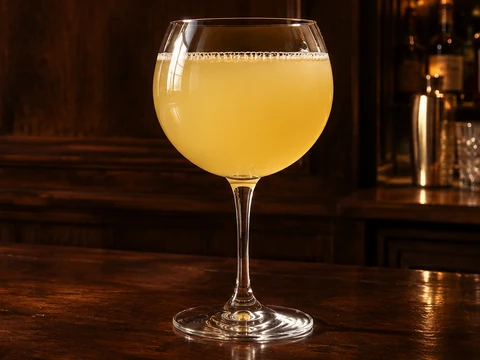 Pisco PunchPineapple · clove · piscoStrength: Moderate 3 out of 5Both recipes use Pisco and Fresh lemon juice. In this one, look for fruit.
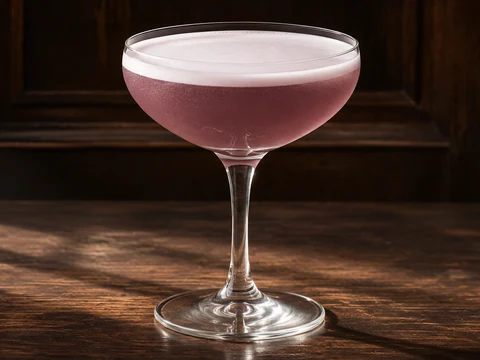 Italian Plum SourPlum · lemon · juniperStrength: Moderate 3 out of 5Both recipes use Fresh lemon juice and Pasteurised egg white. In this one, look for plum.
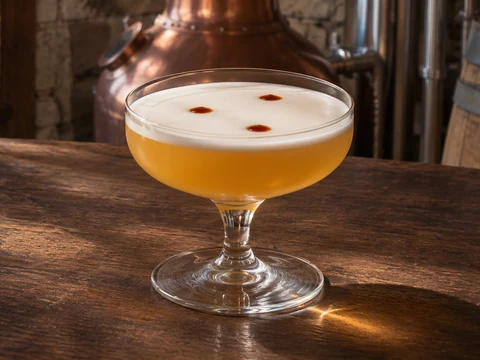 RattlesnakeRye malt, lemon, aniseStrength: Moderate 3 out of 5Both recipes use Fresh lemon juice and Pasteurised egg white. In this one, look for rye malt, lemon, anise.