
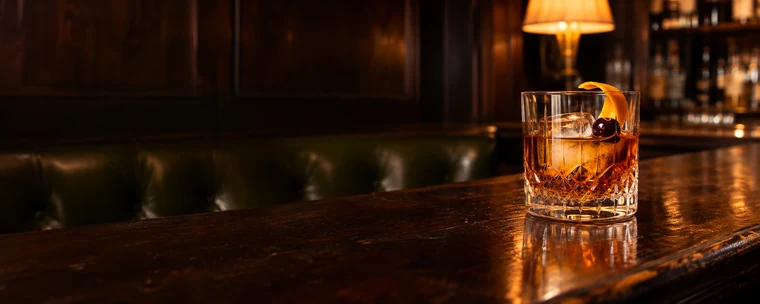
Sazerac
What it tastes like
The aroma of absinthe remains on the glass walls. This version is based on cognac, a little sugar, and Peychaud’s bitters.
Strength: very high 5 out of 5Based on one serving

Ingredients 1 serving
What's dash? It's a small portion of liquid from a dispenser bottle. Turn it over the glass and take one short stroke down. Two dashes, two strokes. The volume depends on the dispenser.
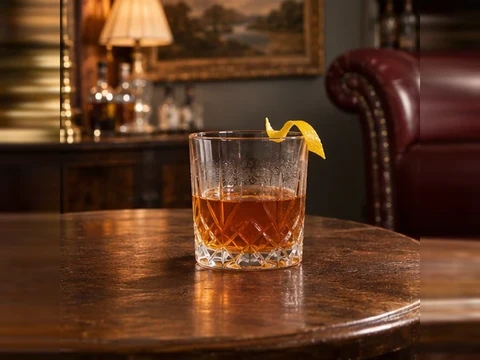
Garnish Lemon zest.
How to make it
 Step 1
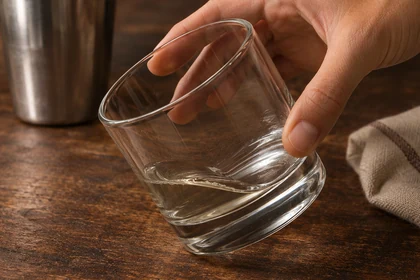
Rinse with absinthe
Absinthe — 10 ml.
Swirl the absinthe around the chilled serving glass to coat the inside. Add crushed ice and set aside. Use a separate glass to mix the drink.
 Step 2
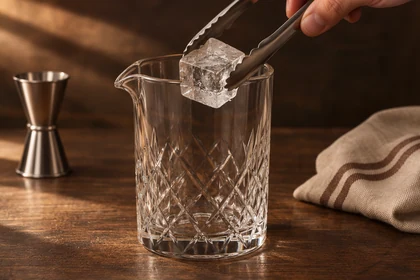
Add ice
Place ice cubes in the mixing glass. Lower the ice with a scoop or tongs closer to the bottom to avoid hitting the glass.
 Step 3
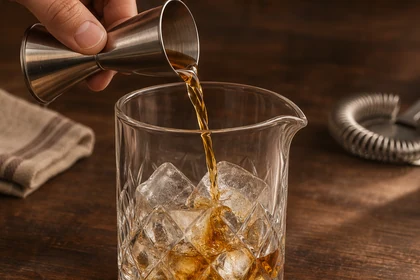
Cognac
Cognac — 50 ml.
Measure the portion and pour it into the mixing glass.
- Step 4
Sugar
Sugar cube — 1 cube.
Place the sugar cube in the mixing glass with the cognac. Reserve the chilled, absinthe-rinsed glass for serving.
 Step 5
Bitters
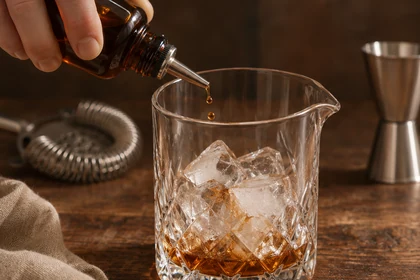
Peychaud’s bitters — 2 dashes.
One dash is a short downward flick of a dasher bottle. Add the number of dashes called for directly to the mixing glass.
 Step 6
Stir
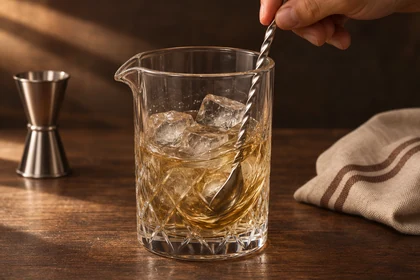
Lower a long spoon almost to the bottom and stir around the inside of the glass to mix the layers. With a smooth stirring motion, the ice turns along the wall of the mixing glass.
 Step 7
Strain
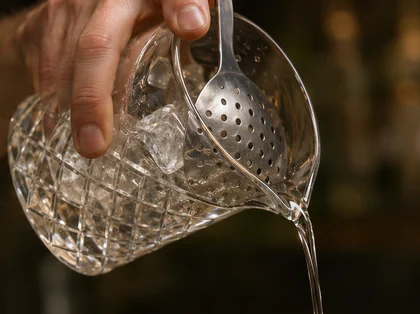
Discard the crushed ice and excess absinthe from the serving glass. Strain the cocktail into the scented glass, keeping the mixing ice behind.
 Step 8
Garnish
Bend a strip of lemon peel over the drink to release the oils, then rest it at the rim.
Why this pairing works
The fennel supports the anise aroma of the absinthe, while the rich flavor of the pâté pairs with the cognac.
The exceptions selected are for the drink. Check the composition of the dish separately.
Glass and serving
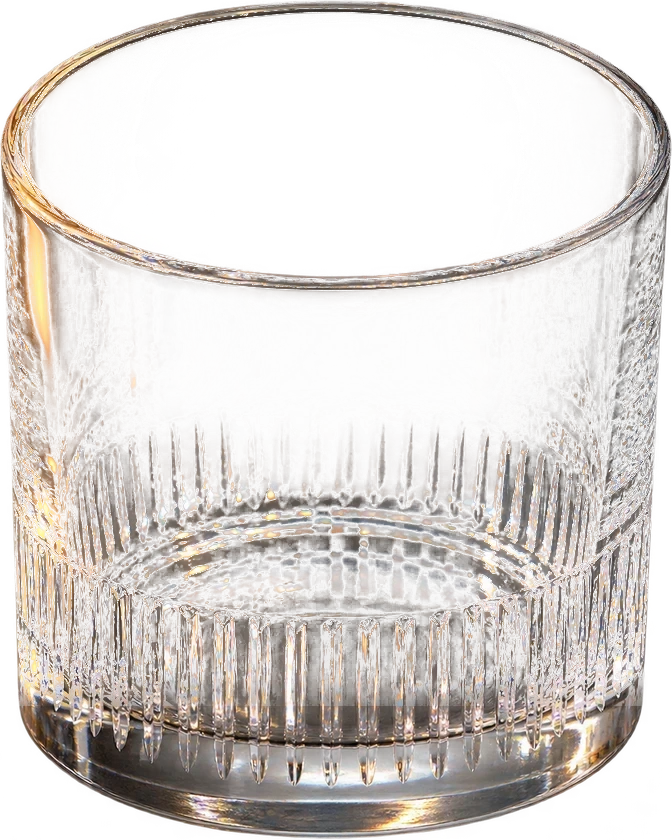
Chilled Old Fashion - A Low Glass
The absinthe flavors the walls, the ice cools the glass, and before serving, the ice is removed: the finished cocktail is left with the smell of absinthe, not a handful of cubes.
Rocks are easily recognized by the low silhouette, wide hole and stable base.
Another glass you can use A small glass with smooth walls, which is convenient to rinse and tilt.
Tools and ice
Serving glass: Chilled old fashioned glass.
Cut a thin strip of zest. If the recipe calls for its oils, bend the strip over the glass.
Ice: For crushed ice, break the cubes into small pieces.
Making your first cocktail?
The mixing glass is left open, and the barspoon is led along the wall in smooth circular motions.
To strain, pour through a bar strainer. To double-strain, hold a fine sieve over the glass as well.
How to Replace Ingredients
The measures in the hints are given for one portion.
- Cognac
The recipe calls for 50 ml. Choose the ingredient listed.
- Absinthe
The recipe calls for 10 ml. Choose the ingredient listed.
- Sugar cube
Recipe: 1 cube. Use a piece of sugar. Bitter and water will help to grind it in a glass, if prescribed by the recipe.
- Peychaud’s bitters
The recipe calls for 2 dashes. Choose the ingredient listed.
The history of the cocktail
In New Orleans, an apothecary, Antoine Peichaud, supplied the establishments with his bitters.
Read onTurn the story
From the pharmacy to the coffee house
The history of the name is connected with the French cognac Sazerac de Forge et Fils, and with the local Sazerac House, so the cognac in the IBA version is historically explainable; a special flavor of the glass gives a thin film of absinthe.
Save recipe
Recipe source
International Bartenders Association
Rinse the chilled glass with absinthe, add crushed ice, and set aside. In a mixing glass, stir the cognac, sugar, and bitters with ice. Remove the ice from the first glass and discard the remaining absinthe. Strain the drink into it.
Illustration of the presentation created for the "Cocktail Atlas".
What to try next
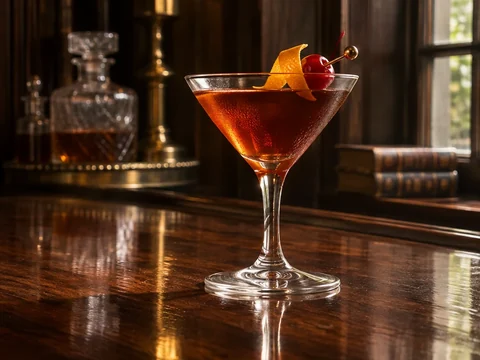 Vieux CarréRye whiskey · herbs · cognacStrength: Very strong 5 out of 5Both recipes use Cognac and Peychaud’s bitters. In this one, look for herbs.
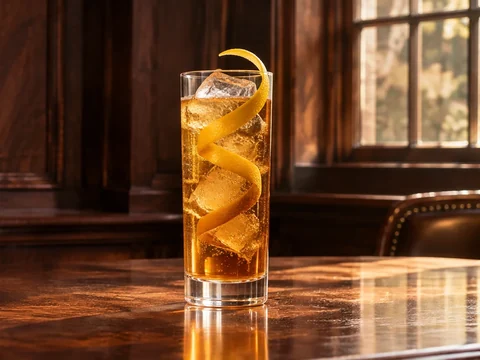 Horse’s NeckGinger ale · lemon peelStrength: Light 2 out of 5Both recipes use Cognac. In this one, look for ginger.
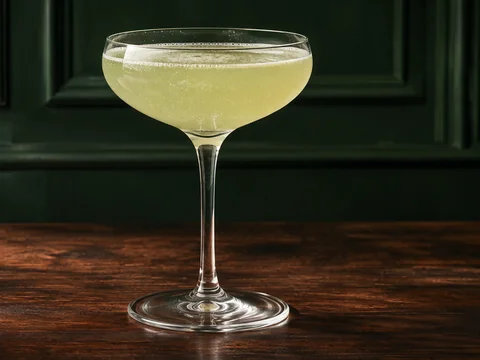 Death in the AfternoonAnise · Sparkling wine · DryStrength: Moderate 3 out of 5Both recipes use Absinthe. In this one, look for wine.
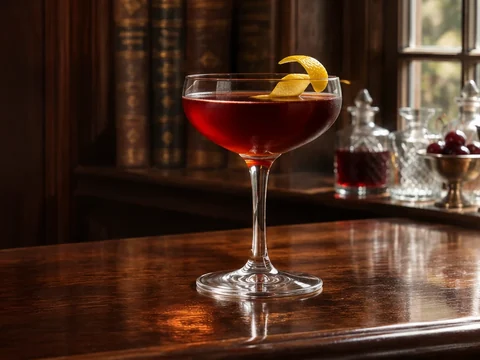 Remember the MaineCherry · rye · aniseStrength: Strong 4 out of 5Both recipes use Absinthe. In this one, look for cherry.
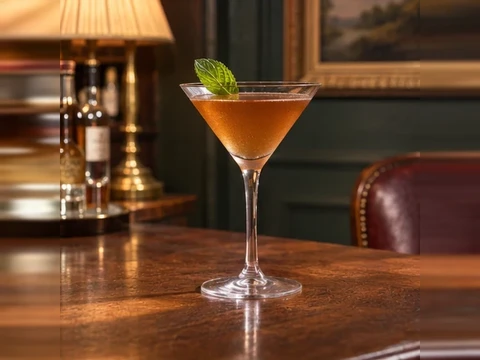 StingerSweet mint · cognacStrength: Very strong 5 out of 5Both recipes use Cognac. In this one, look for mint.
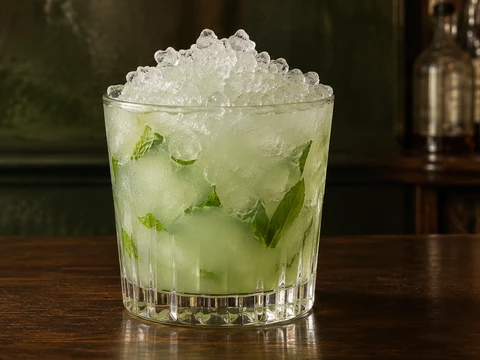 Absinthe FrappéAnise · Mint · SweetStrength: Moderate 3 out of 5Both recipes use Absinthe. In this one, look for mint.