
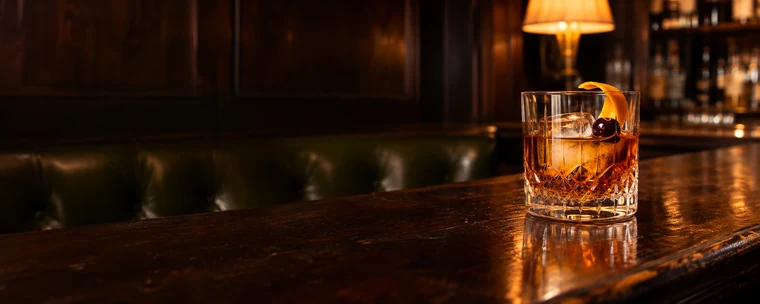

Bartending course · Mixing
How a Whiskey Sour gets its foam
Shaking introduces air. Proteins unfold at the air–liquid boundary, forming thin films around bubbles so the foam subsides more slowly. For this experiment use pasteurised liquid egg white labelled for uncooked use, or aquafaba, the cooking liquid from chickpeas. A sour can also be made without a foaming ingredient and will have a less persistent head.
Step by step
Set up and choose your version
Set out a shaker, jigger, strainer, two matching glasses and ice. Whiskey gives the base its character, lemon supplies acidity, and syrup brings sweetness and body. Use chilled pasteurised liquid egg white labelled for uncooked use and store it as directed. For an egg-free version, strain your aquafaba and check that chickpeas suit the guest. For a classic sour without a foam cap, simply use the base.
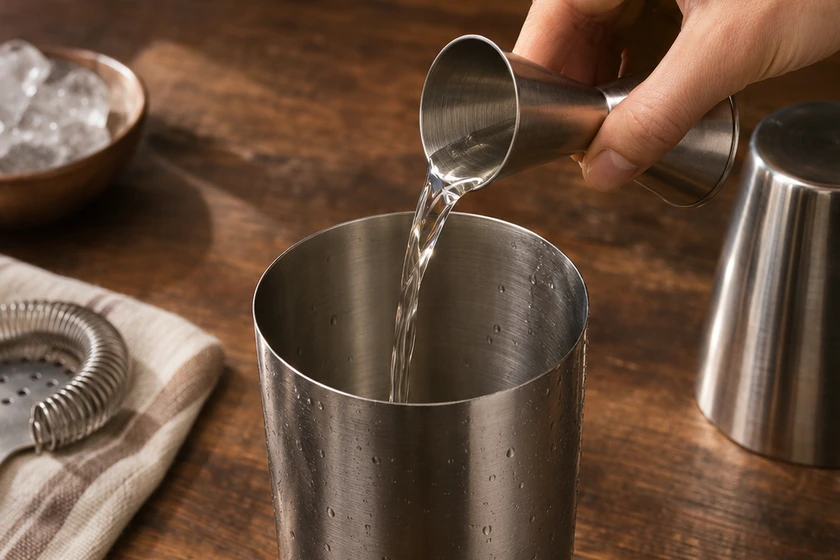
Use the same measured base for both samples. Introduce air first
Seal the first sample in the shaker without ice, leaving room for air. Hold both tins and shake firmly several times until the mix froths. Large bubbles break into smaller ones and surface-active compounds coat their walls. Keep the sample in the tin for the chilling stage that follows.
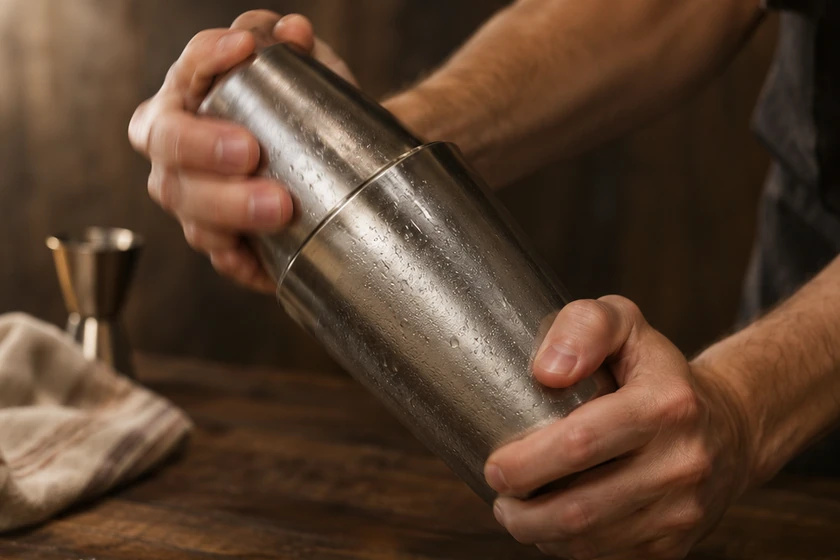
A dry shake means there is no ice in the tin yet. Chill and strain
Open the shaker, add cubes and shake again until cold. Strain into a clean glass in one continuous pour, leaving the large ice pieces behind the strainer. Wash and rinse the tools before preparing the second sample. Match the ice cubes, shake count and pouring method so the comparison is fair.
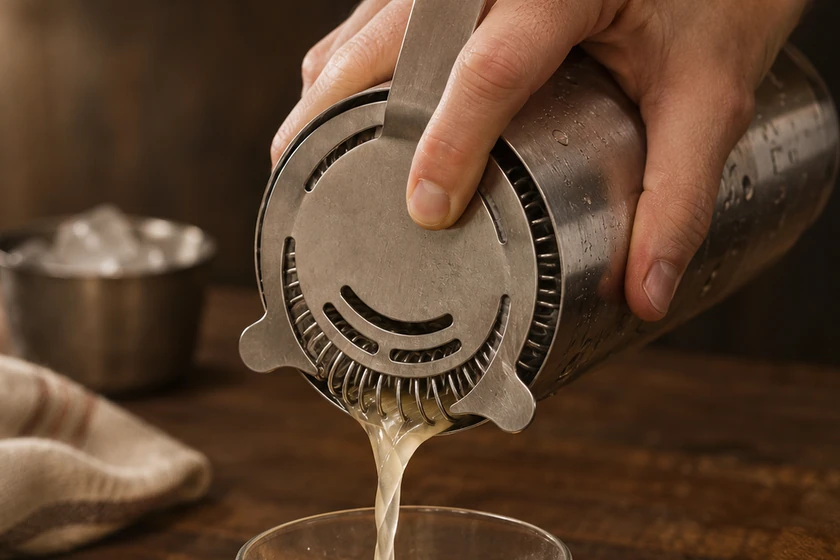
Let both the liquid and the foam reach the glass. Inspect the head one minute later
Stand the glasses together and mark the initial top of the foam with a slip of paper tape on the outside. Compare the height, bubble size and liquid layer a minute later. Large bubbles that quickly vanish are a cue to check headroom, tool cleanliness and the foaming-agent measure. Change just one factor in your next trial. Different brands of aquafaba may give different results.
Try it yourself
Measure the whiskey, lemon and syrup from the recipe. For a comparison, divide the base in half. For this exercise add 5 ml of your chosen foaming ingredient to one half and 5 ml of water to the other. Shake each sample the same way and pour into labelled glasses. Compare bubble size immediately and the height of the head a minute later.
How it works
Shaking carried air into both samples. In the one with egg white, a thin film around the bubbles holds the air for longer. Aquafaba also helps the foam last. The ice chills and dilutes both samples.
Why does one sample keep a fine head for longer after identical shaking?
- Because alcohol releases gas
- Because ice floats inside the foam
- Because a film forms around the bubbles