
London · 1937
A shilling for a recipe at London’s Café Royal
In 1937, Café Royal bartender William Tarling collected his colleagues’ recipes. Some went into print and others could be ordered by post. The Twentieth Century took just a few lines.
What the book left out
Turn to A in the index of the Café Royal Cocktail Book. Alaska, Algonquin and Americano are all there. Look for a page number and you will find a street address instead. At the top of the page the bartenders’ guild invites readers to write to 43 Duke Street, St James’s, London. Pick a drink and the guild will send the recipe for one shilling, postage included.
William Tarling explains how the index came about in a preface signed from the American Bar at the Café Royal. As president of the guild, he had worked through more than four thousand recipes. He wanted hosts to try his colleagues’ drinks. At cocktail parties, he complained, he kept meeting the same old Manhattan and White Lady. The index put even the recipes he had to cut within reach of a reader with a stamp.
Where the royalties went
Before the first cocktail in the 1937 Coronation Edition, the buyer learned what Tarling had arranged for his royalties. Half would go to the guild’s sickness benefit fund and half to the Café Royal sports club fund. At the end of his preface he thanked the bartenders who had given him permission to print their recipes. Between those two notes you can see something of the working lives behind the collection, from sharing a drink of one’s own devising to helping a colleague through an illness.
Five measures for a Twentieth Century
The Twentieth Century made the cut. Beneath its name Tarling credits C. A. Tuck. Two fifths of the drink are Booth’s dry gin. Crème de cacao, the wine aperitif Lillet and lemon juice each get one fifth. The entire method is a single instruction to shake. A bartender with a different measure, or a cupboard full of smaller glasses, could still make sense of those fractions.
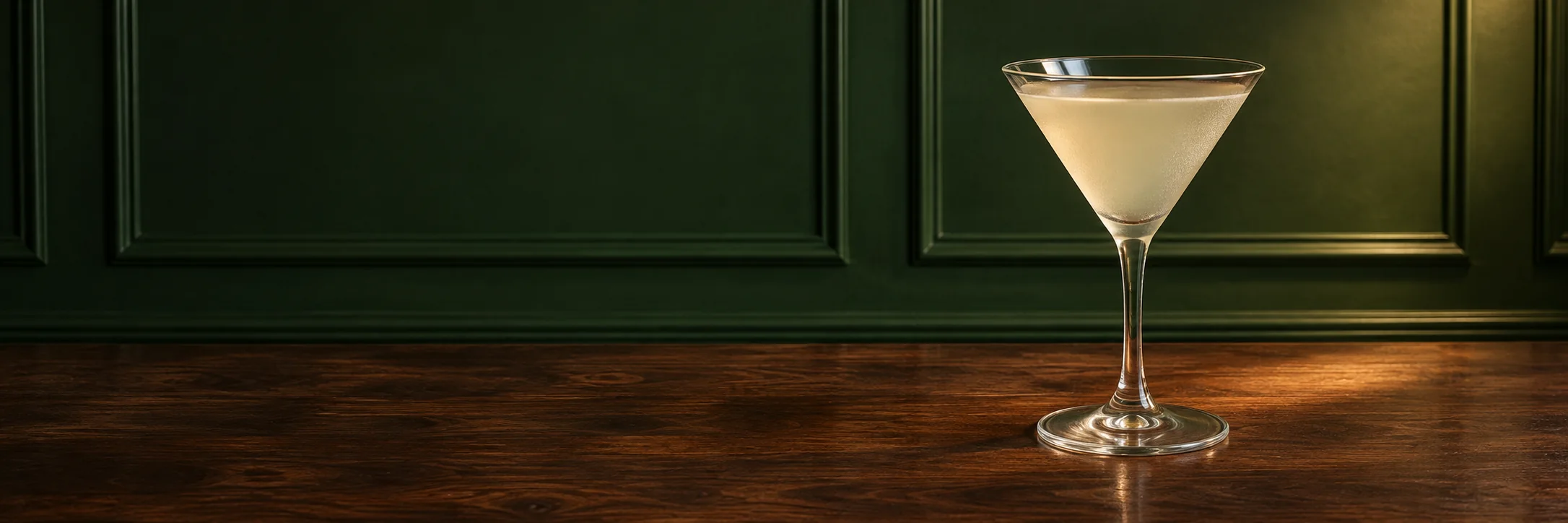
For the Atlas version, find the 22.5 ml line on your measure. Fill to that line twice with gin, then once each with the aperitif, white crème de cacao and fresh lemon juice. Shake with ice and strain into a chilled glass. Notice how much cocoa you can smell in a drink this pale. The Atlas specifies a white liqueur. The 1937 entry simply calls for crème de cacao and leaves its colour open.
Documents and first-hand accounts
- Coronation Edition, p. 231. The guild’s address and the price of a recipe
- P. 1. Tarling on choosing recipes for the book
- Leaf X. The arrangement for Tarling’s royalties
- P. 6. How to measure the fractions and whom Tarling thanks for the recipes
- P. 191. The Twentieth Century entry crediting C. A. Tuck
- Fords Gin. Modern proportions for the Twentieth Century