
United States · 1888–1947
How the drinking straw got its bend
Marvin Stone wound a drinking straw from a strip of paper. Half a century later, Joseph Friedman worked out how to make it bend at the rim. Their patent drawings show how each idea worked.
A spiral of paper
The first sheet of Marvin Stone’s US patent, issued on 3 January 1888, shows a finished straw and a narrow strip of paper. Figure 4 connects the two. A strip winds around a spindle, each turn overlapping the last. Stone proposed dipping the finished tube in melted paraffin. The wax sealed the seams and kept liquid from soaking into the paper.
Stone had even thought about the colour. He wanted his paper tube to pass for a natural stalk and suggested tinting it before applying the wax. A manufacturer looking at his drawing saw a strip that could be wound to order. Someone picking up the finished straw was meant to see something familiar.
A screw at a San Francisco soda fountain
At a soda counter, a straight straw in a tall glass can put the first sip out of reach. The Smithsonian’s guide to Joseph Friedman’s papers traces his interest in that problem to his brother Albert’s Varsity Sweet Shop in San Francisco. Joseph watched his daughter Judith struggle to reach her straw. He slipped a screw inside a paper straw, then wound dental floss round the outside to press the paper into the threads.
Look at Figure 2 in Friedman’s patent of 28 September 1937. A cutaway shows a short run of folds near the top. Bend a plain paper tube over a rim and its walls pinch together at one point. With Friedman’s design, the folds bunch up on the inside of the curve and open out on the outside. A guest could turn the tip towards them and still draw liquid through it.
The glass stays on the table
The family records put ten years between the patent and the first sale. Hospitals were the company’s first market, and an order came through in 1947. Joseph’s sister Betty ran sales and distribution. At a bedside the bend served another purpose, one Joseph had anticipated in the patent. The tip could reach someone who was lying back while the glass stayed upright.
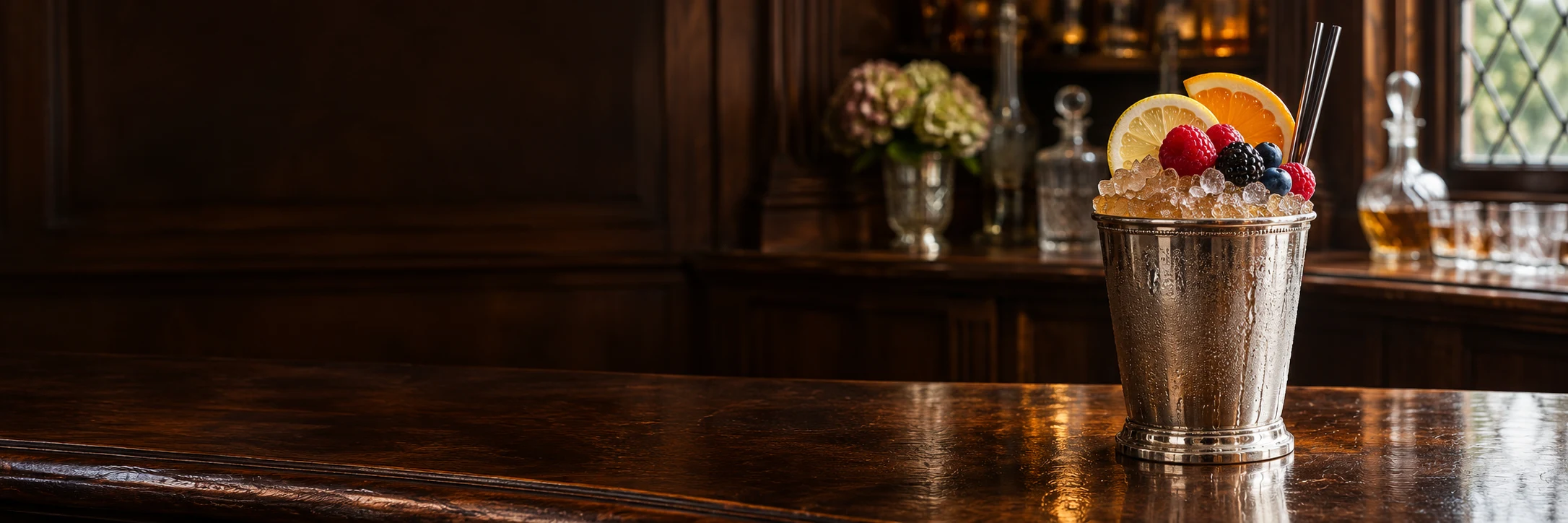
Try looking at an Atlas Sherry Cobbler from the seated guest’s side of the table. Berries and citrus slices rest on a mound of crushed ice. Slip the long end of a flexible straw down the side of the cup into the sherry. Leave the bend above the rim and turn the short end towards the guest. The cup can stay on the table for that first sip, with the fruit still balanced on the ice.