
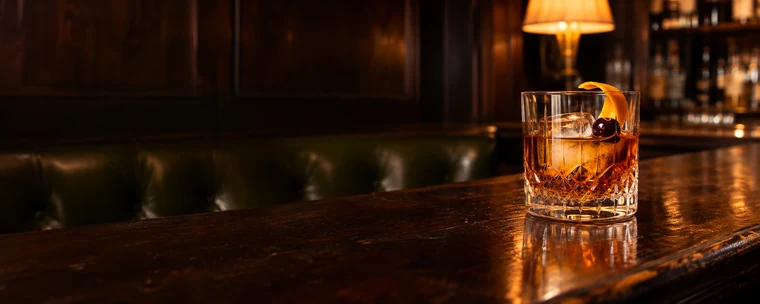
St. Louis · 1917
Tom Bullock’s two juleps
In Tom Bullock’s book, one julep comes in a silver mug and another takes a whole bottle of soda. What did he expect a reader to learn beyond the ingredients?
Read the last line first
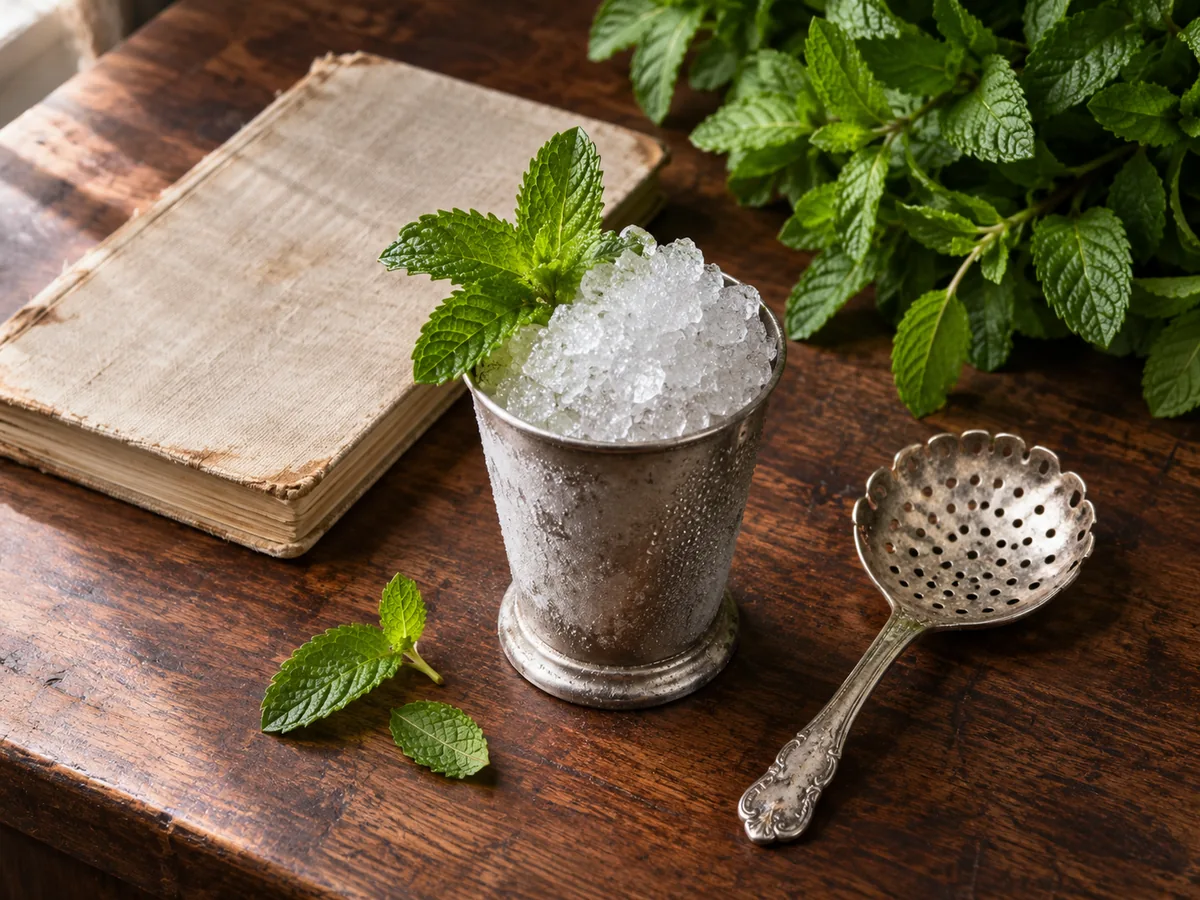
In the Kentucky Style recipe, Bullock dissolves sugar in water, fills a silver mug with fine ice, adds bourbon and stirs. Only then does the mint appear. His last line warns the reader against bruising it. A shopping list would never tell you that. Start by crushing the leaves into the sugar and you have made a different drink without changing a single ingredient.
On the same page is the Overall Julep, labelled St. Louis Style. Rye meets gin, grenadine, lemon and lime. Bullock shakes the mixture over ice, pours it into a tall, thin glass and finishes it with soda. There is no mint in this entry at all. In a single book, a place name and a few verbs can tell you more about the drink than the word “julep”.
Whose voice is on the page?
The Ideal Bartender appeared in St. Louis in 1917. Before readers reach the Black bartender’s recipes, other voices introduce him. A newspaper doubts, in jest, that Theodore Roosevelt could have left one of his juleps unfinished; G. H. Walker recalls his work at clubs in Louisville and St. Louis. The clipping tells us something about his reputation. For what happened inside the mug we have to read Bullock himself.
Bullock dedicates the book to people who enjoy club rooms and might like to make the drinks themselves. Take him up on it: open the Atlas recipe alongside his and mark the moment the mint meets the drink in each version. Note the verb as well as the order. You now have a useful difference between two recipes, without having to declare either of them the only real julep.