
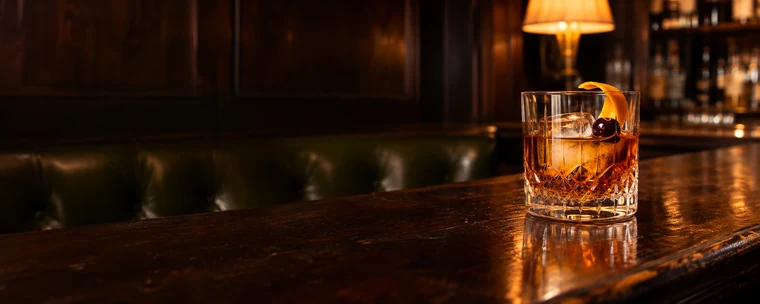
Chrysanthemum
What it tastes like
Dry vermouth brings wine-like acidity, with honeyed herbs from Bénédictine at mid-palate. Orange rises from the rim and the anise carries through the finish.
Strength: moderate 3 out of 5Based on one serving

Ingredients 1 serving
Recipe note
Dry vermouth forms the base of this small aperitif. Bénédictine rounds it out and a few dashes of absinthe bring a distinct anise aroma.
What's dash? It's a small portion of liquid from a dispenser bottle. Turn it over the glass and take one short stroke down. Two dashes, two strokes. The volume depends on the dispenser.
Garnish Orange peel
How to make it
 Step 1
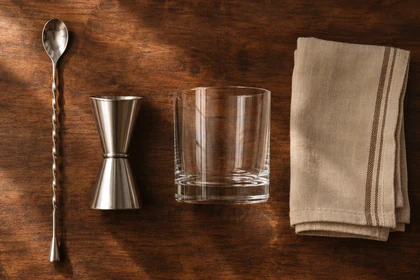
Chill the glass and pare the orange
Orange peel — 1 strip.
Chill the glass in the fridge. Pare a thin strip from a washed orange and set it aside.
 Step 2
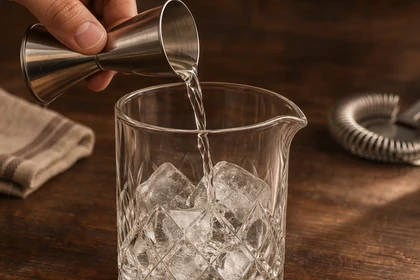
Measure the vermouth, liqueur and absinthe
Dry vermouth — 50 ml; Bénédictine D.O.M. liqueur — 15 ml; La Fée Parisienne absinthe — 4 dashes.
Pour 50 ml chilled dry vermouth and 15 ml Bénédictine into the mixing glass. Add four dashes of absinthe, giving the dasher bottle one short, firm flick per dash.
 Step 3
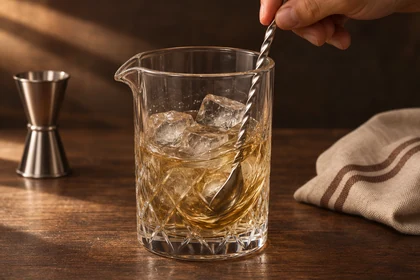
Stir over ice
Ice cubes for stirring — for stirring.
Fill the mixing glass with ice cubes. Guide the spoon around the inside wall until the glass feels cold and the liqueur is evenly mixed.
- Step 4
Strain and add the orange peel
Pour through the cocktail strainer and fine sieve into the empty glass. Flex the orange peel coloured side down over the drink, then set it at the rim.
Why this pairing works
Try a small goat-cheese toast. Its tang follows the sweet liqueur cleanly and leaves room for the herbal vermouth.
The exceptions selected are for the drink. Check the composition of the dish separately.
Glass and serving
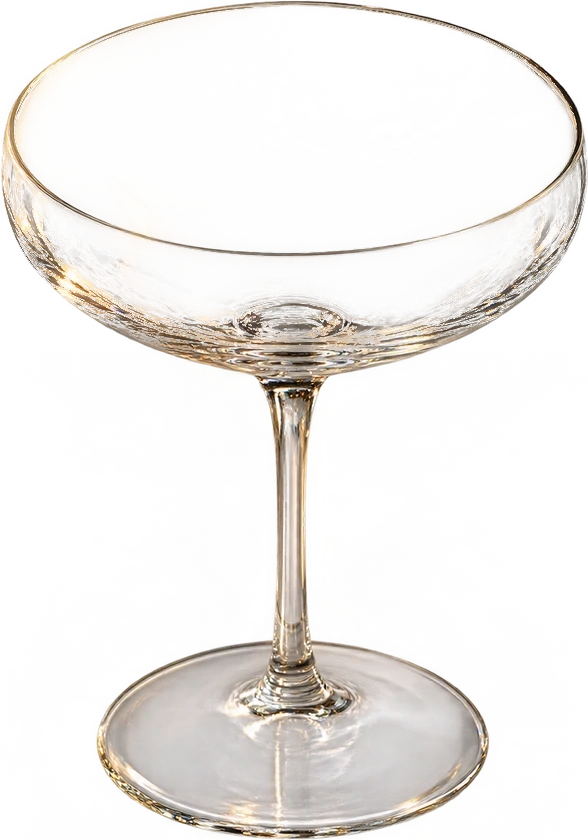
Chilled Nick & Nora glass, 100–120 ml
The small stemmed bowl concentrates the orange oils around the rim.
A coupe has a wide, shallow bowl with gently curved sides and a slim stem.
Another glass you can use Use a small coupe chilled in the fridge.
Tools and ice
Serving glass: Chilled Nick & Nora glass, 100–120 ml.
Orange peel
Ice: Ice cubes for stirring.Serve without ice.
Making your first cocktail?
The mixing glass is left open, and the barspoon is led along the wall in smooth circular motions.
Ice cubes for stirring.Serve without ice.
How to Replace Ingredients
The measures in the hints are given for one portion.
- Dry vermouth
Use 50 ml dry or extra-dry vermouth, such as Noilly Prat Original Dry. Sweet red vermouth changes the flavour. For a lighter version with fewer herbal notes, use 50 ml dry white wine. Martini’s guide to vermouth
- Bénédictine D.O.M. liqueur
The recipe calls for 15 ml. Choose the ingredient listed.
- La Fée Parisienne absinthe
The recipe calls for 4 dashes. Choose the ingredient listed.
- Orange peel
Recipe: 1 strip. Orange also works.
- Ice cubes for stirring
Use this ingredient for stirring.
The history of the cocktail
Hugo Ensslin’s 1917 book mixed French vermouth and Bénédictine in equal parts with absinthe and a twist of orange.
Read onTurn the story
Chrysanthemum
Difford’s Guide builds its version around a larger share of dry vermouth.
Sources
Save recipe
Recipe source
Chill the glass in the fridge. Pare a thin strip from a washed orange and set it aside. Pour 50 ml chilled dry vermouth and 15 ml Bénédictine into the mixing glass. Add four dashes of absinthe, giving the dasher bottle one short, firm flick per dash. Fill the mixing glass with ice cubes. Guide the spoon around the inside wall until the glass feels cold and the liqueur is evenly mixed. Pour through the cocktail strainer and fine sieve into the empty glass. Flex the orange peel coloured side down over the drink, then set it at the rim.
Illustration of the presentation created for the "Cocktail Atlas".
What to try next
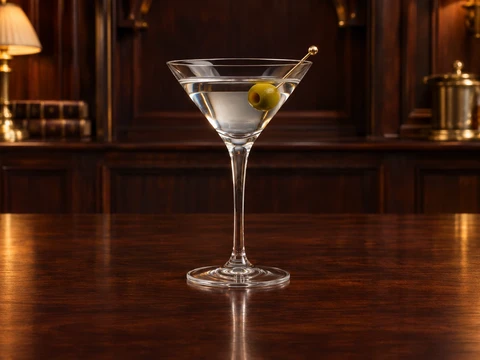 Dry MartiniDry gin · juniperStrength: Very strong 5 out of 5Both recipes use Dry vermouth. In this one, look for a dry finish.
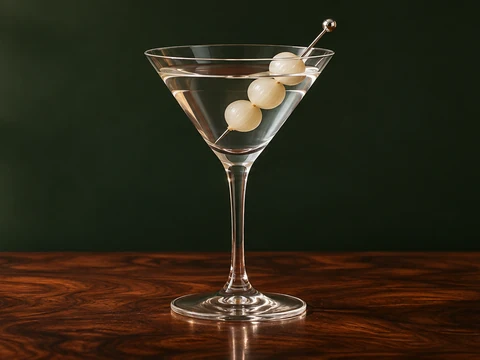 GibsonJuniper · dry · saltyStrength: Very strong 5 out of 5Both recipes use Dry vermouth. In this one, look for juniper.
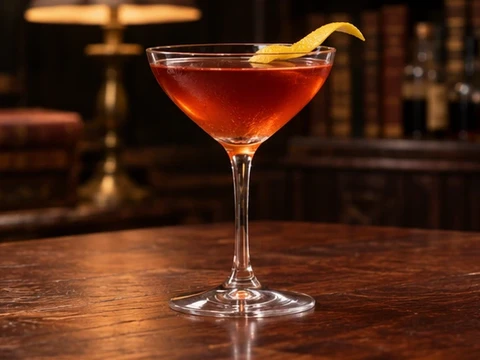 CardinaleDry vermouth · bitter herbsStrength: Strong 4 out of 5Both recipes use Dry vermouth. In this one, look for a dry finish.
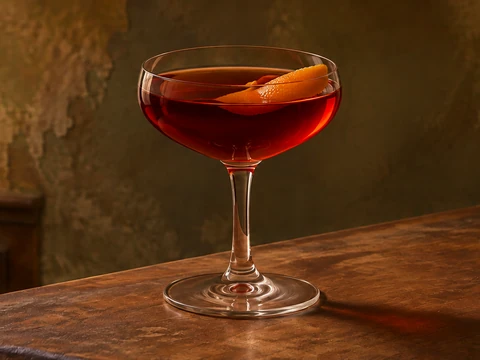 Mi-ToBitter orange · herbs · spiceStrength: Moderate 3 out of 5Both recipes use Orange peel. In this one, look for bitter orange.
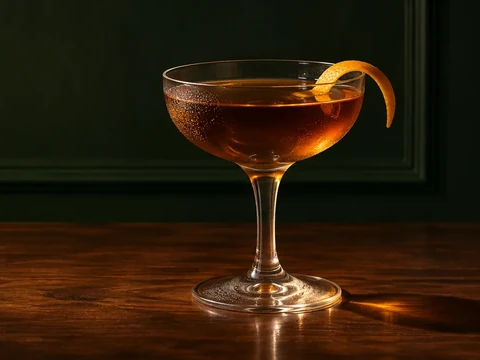 AdonisSherry · Wine · HerbsStrength: Light 2 out of 5Both recipes use Orange peel. In this one, look for sherry.
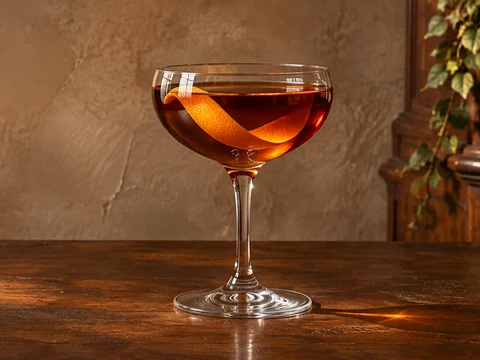 HarvardCognac · vermouth herbs · orangeStrength: Strong 4 out of 5Both recipes use Orange peel. In this one, look for cognac.